Chinese Acupuncture Clinic
Call Today 719-634-1669

Chinese Herbology
Some people in the USA buy Herbs
like Ginseng or Dang Gui from a supper market and take them singly for a long time without
consulting a trained Chinese Herbalist. This can harm people's health since Chinese
herbs are hardly ever prescribed singly. In a Chinese herbal formula, different herbs are
prescribed to work as a team to enhance the positive effectiveness of each herb, while reducing
the negative effects.
There are sophisticated rules and strategies
for composing Chinese herbal formulas. A skilled Chinese herbalist can create an individualized
herbal formula that fits the patient's current
condition exactly and without side effects. The formula is modified accordingly as the condition
improves or changes.
Here at The Acupuncture Clinic, Dr. Na Zhai sometimes recomand
chinese herbs to support Acupuncture treatment result, if the condition needs. She also give separate
consultation only for Chinese Herbs by request. The Chinese Herbs available at our clinic are in the
following forms: raw herbs, concentrated powder, tea bags and classic formulas (tea pills).
Should you decide to use Chinese herbs for your condition,
there are usually three steps of care involved:
Step 1 Symptomatic Care: During this stage your doctor is
concerned with alleviating the symptoms causing you to seek her care. This phase of care takes only a short
period of time. Once your symptoms are relieved, you will move on to Step 2.
Step 2 Corrective Care: In order to restore your health,
your doctor must also determine the underlying cause of your illness, rather than simply address the symptoms.
This involves the prescriptions to address the root of your concerns. This phase of care can take a period of
time from weeks to months depend on how long the condition has been existing and how severe the existing
condition is.
Step 3 Prophylactic Care: The final phase of your treatment
includes maintenance therapy. Your doctor will prescribe herbs to keep your immune system strong and healthy,
harmonize your body systems to support each other’s functions, so the body can maintain the optimal health and
promote longevity. This phase of care is ongoing.
How To Take Chinese Herbs?
According to Traditional Chinese Medicine
theory, each herb has five properties (cold, cool, neutral, warm, and hot), and five
flavors (sweet, Sour, pungent, bitter and salty), which are related to its therapeutic
actions. Decocted (boiled down) raw herbs do not always suit the patient's palate.
However, the taste of the herbal tea is part of the therapeutic action of the herbs.
It seems that after time, the body begins to crave a certain formula, especially the ones
that help the body and you will find the taste to be more attractive.
For people who cannot stand the taste
, there are alternatives. There are
herbal formulas made in form of pills, tablets, powder and tincture. These are not
going to be as beneficial as an individually tailored raw herbal formula, but they
work well for most common conditions and they are convenient to take.
How To Cook Chinese Herbs?
Container Use a container with a lid. Ceramic containers(like a teapot)is the best for cooking Chinese
herbs, and glass or stainless steel are good,too. Avoid cast iron or other metals; some Chinese
herbs can interact with these metals causing chemical reactions that can alter the therapeutic
qualities of your herbs, or even worse, can have an unhealthy effect on your body. Soak The Herbs Cook The Herbs Strain The Tea (tea #1, about one 8-ounces cup) Strain The Tea Again (tea #2, about one 8-ounces cup) Mix Tea #1
and Tea #2 for drinking.
When To Take The Herbs?
It is the best to drink the herb tea warm and on an empty
stomach. This provides the best absorption of the ingredients of the herbs. You
can drink half the tea a half hour to one hour before dinner, or 2-3 hours after
dinner. refrigerate the remaining tea for next day and take it about a half-hour before breakfast. ·
If you find the taste so unpalatable that you can’t
drink it, water it down a bit, Or add a little honey to sweet it. This
should only be done with the consent of your herbalist. Honey or anything else
can adversely affect the therapeutic qualities of the formula and so it should
only be added when absolutely necessary. It seems that after a time, the body begins to
crave a certain formula, especially the ones that helps the body and you’ll find
the taste to be more attractive. ·
If the herb tea causes a little stomach upset, drink the
herb tea one hour after eating. If the tea causes nausea, drink some fresh
ginger juice or eat some fresh ginger before taking the formula. ·
If you are taking other medicines, take them at least one hour
before or after you drink the herb tea.
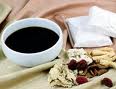 Chinese Herbology or Chinese Herbal
Medicine is the application of various combinations or formulas of Chinese herbs to treat
and prevent a wide range of diseases while balancing the body and activating the body's
natural healing process. Most formulas consist at least two or more different kinds of herbs.
Chinese Herbal Medicine can be used by itself or in combination with Acupuncture as a
supportive treatment.
Chinese Herbology or Chinese Herbal
Medicine is the application of various combinations or formulas of Chinese herbs to treat
and prevent a wide range of diseases while balancing the body and activating the body's
natural healing process. Most formulas consist at least two or more different kinds of herbs.
Chinese Herbal Medicine can be used by itself or in combination with Acupuncture as a
supportive treatment.